Schedule
now
Thorough, builder-trained inspections to give you clarity and confidence before you buy or sell.
Structural
Foundation, crawlspace, and structural framing
Roof structure, attic, and visible
insulation
Exterior walls, siding, trim, and drainage
Windows, doors, and visible signs of movement or settlement
Interior walls, ceilings, floors, and stair systems
Electrical
Main service panel, breakers, and fuses
Wiring type, condition, and visible safety concerns
Outlets, switches, and GFCI/AFCI
protection
Grounding and bonding systems
Light fixtures and overall electrical functionality
Plumbing
Water supply lines and distribution systems
Drain, waste, and vent piping
Water heater condition and operation
Fixtures, faucets, and visible leaks
Sump pumps and drainage systems (if present)
HVAC
Furnace and heating system components
Air conditioning system and cooling performance
Ductwork, vents, and airflow
Thermostats and system controls
Visible condition, age, and overall operation
Professional Radon Testing
-Accurate radon gas testing designed to safeguard your home and family
-Performed in accordance with EPA-recommended standards for dependable results
-48-hour continuous monitoring to capture true indoor exposure levels
-Easy-to-read, detailed reports that clearly explain your results
-Straightforward recommendations and next steps if elevated levels are found
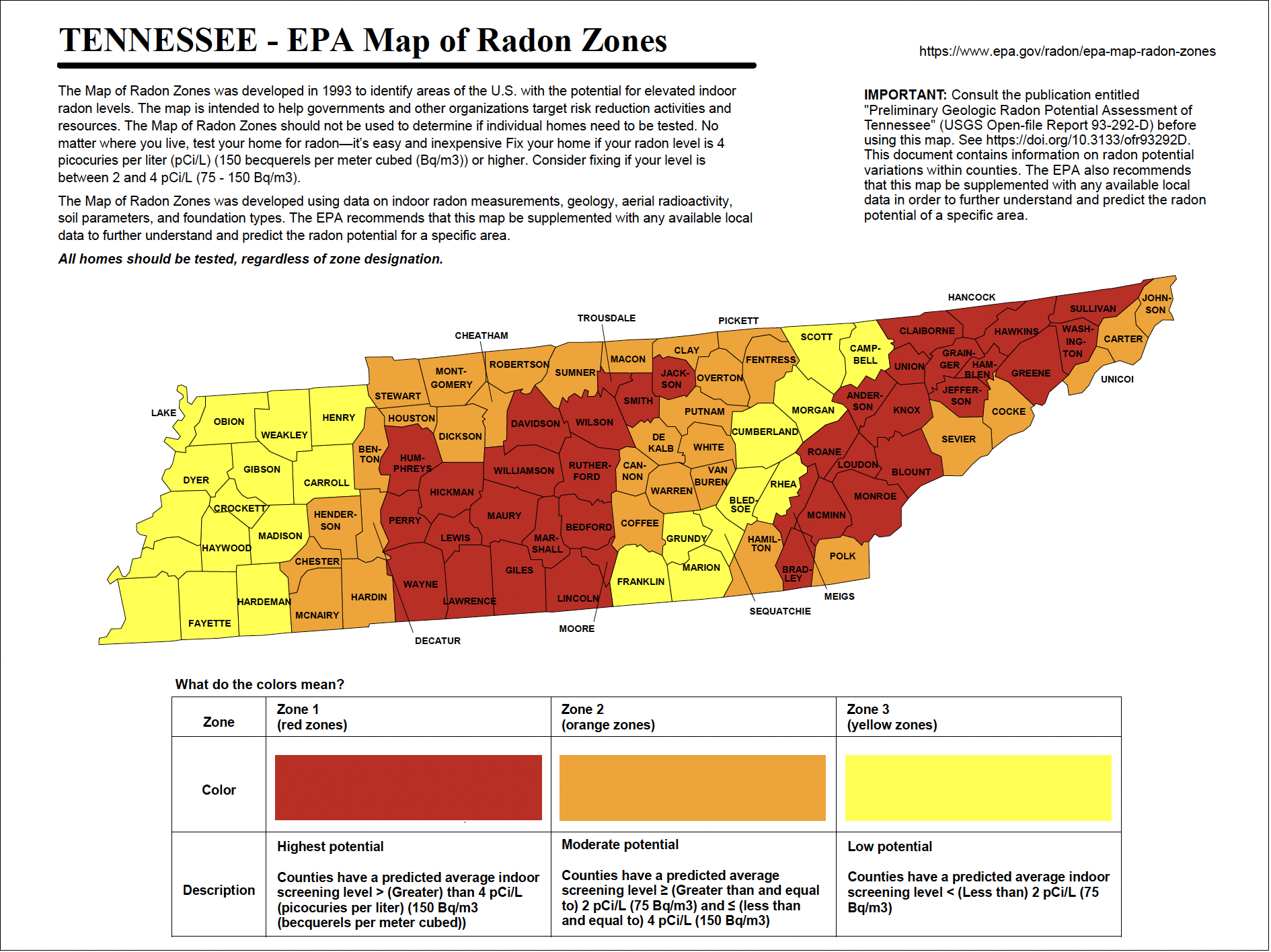
Nashville homes are in the highest-risk zone for radon, with many houses naturally testing above safe levels. Testing is the only way to know your home’s indoor air is safe.
Radon Resources
Tennessee Has Some of the Highest Radon Levels in the U.S.
Large areas of Middle and East Tennessee—especially Davidson, Williamson, Rutherford, Knox, and surrounding counties—are classified as Zone 1 (highest potential), meaning homes frequently test above the EPA action level of 4.0 pCi/L.
Radon Is the #2 Cause of Lung Cancer in the U.S.
The EPA estimates 21,000+ deaths annually are linked to radon exposure. It is the leading cause of lung cancer among non-smokers, making testing a critical part of a complete home inspection.
Radon Enters Through the Foundation—Not the Air Outside
Radon is drawn into homes through cracks in slabs, crawlspaces, sump pits, and gaps around plumbing. Even brand-new homes or well-sealed homes can develop elevated levels due to pressure differences in the soil beneath the structure.
Radon Mitigation Is Affordable and Highly Effective
Professional mitigation systems typically reduce radon levels by up to 99%, often costing less than other major home repairs. Tennessee homes with basements and crawlspaces benefit significantly from sub-slab or sub-membrane depressurization systems.